
Most good ideas don’t fail because they’re bad. They fail because execution breaks down. Across organizations of every size, momentum often stalls not at the vision stage, but after alignment seems to exist. Everyone agrees. The plan looks solid. And then progress slows, ownership blurs, and urgency fades.
Want to hear how this plays out in real time? ▶️ Watch the full episode to hear Chris Davidson explain why initiatives stall and what actually moves them forward.
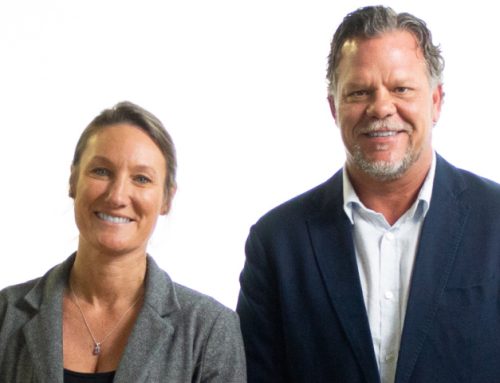
For more than a decade, Chris Davidson, founder of Orca Strategies, has worked inside that gap between intention and action. His work sits at the intersection of business, government, and community development, where complexity is the norm and execution is rarely straightforward. What he sees repeatedly is not a shortage of ideas, but a breakdown in responsibility and follow-through.
Execution fails quietly. Responsibilities are shared too broadly. Accountability becomes diffuse. Timelines stretch. What looks like collaboration on the surface often masks a deeper problem: no one truly owns the outcome. Projects don’t collapse in dramatic fashion; they simply never fully materialize. In that sense, execution is less a technical challenge and more a leadership one. Without clear ownership and a willingness to make decisions in imperfect conditions, even well-funded and widely supported initiatives can stall indefinitely.
One of the most common miscalculations leaders make is treating business and government as separate worlds. In reality, public policy shapes nearly every aspect of daily life, from infrastructure and workforce development to housing, transportation, and economic growth. Whether organizations engage with that reality or not, they are affected by it. Avoidance doesn’t create insulation; it creates blind spots.
Many leaders hesitate to engage because policy feels opaque or inaccessible. That perception becomes self-reinforcing. The less engagement occurs, the more foreign the system feels, even as decisions continue to be made that directly impact businesses and communities. Understanding how policy works doesn’t require becoming a lobbyist. It requires recognizing that long-term outcomes are shaped by systems that reward preparation, relationships, and consistency.
Inside those systems, decision-making is rarely clean or linear. At the state level, thousands of bills move through compressed timelines. Conversations happen in hallways as often as they do in formal settings. Information is incomplete. Pressure is constant. In that environment, trust becomes a form of currency. Organizations that wait until the last minute to engage often find themselves reacting instead of shaping outcomes.
Another pattern emerges in stalled initiatives: alignment without movement. Groups agree on goals, reaffirm consensus, and schedule more meetings, yet nothing advances. Alignment becomes a substitute for action rather than a catalyst for it. Progress requires someone willing to step into discomfort, make decisions, and accept that not everyone will be perfectly satisfied. Leadership in complex environments is less about balance and more about clarity.
Momentum also slows when leaders try to carry everything themselves. Holding on tightly can feel responsible, but it often turns leaders into bottlenecks. Progress accelerates when leaders cast a clear vision, invite others into the work, and allow shared ownership to take hold. Delegation, done well, is not abdication. It’s trust.
Underlying all of this is a longer view of progress. Meaningful change compounds slowly, especially in environments shaped by policy, funding cycles, and human relationships. Quick wins are rare. Consistency, repetition, and sustained engagement matter more than bursts of activity. The leaders who make the greatest impact are often those committed to the long arc, showing up repeatedly even when results aren’t immediate.
Ideas are abundant. Execution is rare. Organizations that move from ideas to impact are not necessarily the ones with the most compelling visions, but the ones willing to engage complexity, navigate policy realities, and take ownership of the hard work that follows agreement. In environments where everyone agrees but nothing moves, execution is the differentiator — and leadership is what makes it possible.
This article only scratches the surface. ▶️ Watch the full episode to hear Chris Davidson break down why initiatives stall and how real progress happens.
Want to be on the forefront of what’s happening in the 757? Subscribe to the newsletter and stay connected to the people, ideas, and momentum shaping the region. Join here.