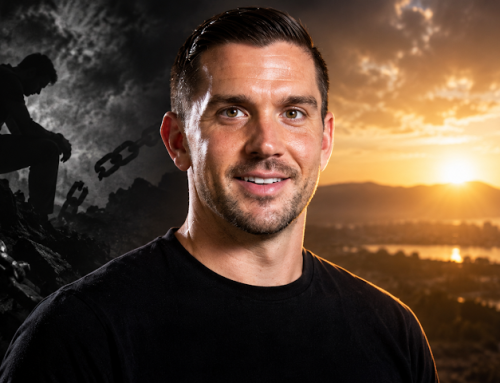

Founders rarely say, “I don’t know what to do.” What they say instead is that everything feels harder than it should. Decisions stall. Perspective narrows. The same problems keep resurfacing under different names. Tracy Lamar-Ray doesn’t frame this as a motivation problem or a resilience gap. She frames it as a capacity issue. In her view, the real bottleneck in founder growth isn’t effort or intelligence. It’s cognitive bandwidth.
Cognitive bandwidth is the real constraint
Tracy puts it plainly: “When we are stressed and our bandwidth is here, literally, your cognition shrinks, and your ability to discern and make good decisions is limited.” This isn’t metaphorical. It’s biological. Under stress, the brain shifts into threat response. “It is a threat response. It’s biological.” For founders, this matters because businesses are built on judgment. When bandwidth collapses, decisions don’t become emotional, they become simplistic. Nuance disappears. Everything turns into urgency or avoidance. Founders often mislabel this as burnout or lack of discipline, when the real issue is that the brain is no longer operating in a state that allows for strategic thought.

Businesses can’t outgrow the founder’s capacity
One of Tracy’s clearest through-lines is that growth is not abstract. “We are the ones that limit our business’ growth by our own personal growth.” She sharpens it further: “It’s not possible for us to grow a business that transcends our willingness to grow and develop.” This reframes scale entirely. A founder can hire talent, raise capital, and refine product, but if their internal capacity hasn’t expanded, the organization will eventually hit a ceiling. The limit doesn’t show up as failure right away. It shows up as friction, reactivity, and repeated patterns the founder can’t quite explain.
Stress doesn’t just hurt, it distorts
Founders often believe they’re making rational choices under pressure. Tracy challenges that assumption directly. “There’s no creative thought. There’s no room for creative problem solving. It is just about survival.” In survival mode, the brain prioritizes short-term safety over long-term value. That’s why founders under sustained stress default to familiar habits, even when those habits no longer work. Tracy connects this to bandwidth preservation, not as wellness rhetoric, but as a decision-making prerequisite. “To open up that bandwidth opens up the potential for creative thought.” Without that space, founders aren’t choosing between good options. They’re reacting to perceived threats.
Self-awareness is not reflection, it’s feedback literacy
Tracy returns repeatedly to self-awareness as the starting point, but not in the abstract sense. “Self awareness is the place to start.” She describes how easy it is to evaluate others and how difficult it is to turn the lens inward. The reason founders struggle here isn’t ego. It’s pain avoidance. Looking inward requires confronting patterns that once protected you but now limit you. Tracy grounds this in neuroscience. “Our brains are what we call plastic… If they didn’t, we wouldn’t learn at all.” Growth is possible, but only if founders are willing to observe themselves with the same rigor they apply to their businesses.
Habits, not motivation, determine change
Founders often wait for clarity or confidence before changing behavior. Tracy explains why that rarely works. “The brain loves patterns. It loves the path of least resistance.” Habits exist because they conserve energy. Changing them requires effort because it means rerouting well-worn neural pathways. “If you’ve been doing something a certain way forever, it’s kinda like the Grand Canyon.” Under pressure, the brain defaults to the old path. That’s why change feels uncomfortable and why founders revert when stress spikes. Progress comes from repetition, structure, and support, not willpower. New behaviors only stick once they become the new reflex.
Burnout is an operational risk, not a badge
Tracy speaks as an operator, not a commentator. “Burnout is real in entrepreneurship, and your business can’t afford you to be burned out.” That framing matters. Burnout isn’t just personal depletion. It’s organizational risk. A founder running on depleted bandwidth creates systems that mirror that state. Tracy points to agency as the counterweight. “You get to determine and guide your ship in a way that works for you and your team.” Preserving capacity isn’t softness. It’s leadership. A business built on constant threat response will eventually break under its own weight.
Growth requires courage, not confidence
When founders avoid asking for help, it’s rarely because they don’t value it. Tracy names the real barrier. “It takes immense courage to accept that you don’t have it all figured out.” Shame, fear, and identity keep founders isolated long past the point where intervention could help. Waiting until desperation raises the cost of recovery. “If we can reduce the length of the suffering and the amplitude of the suffering, why would you not want that?” Early support isn’t weakness. It’s preservation of optionality.
The through-line of Tracy Lamar-Ray’s perspective is simple and uncomfortable. Founders don’t operate in a vacuum of logic. Their decisions are downstream of their nervous system, their habits, and their unexamined constraints. When bandwidth shrinks, judgment shrinks with it. When capacity expands, so does the business. The work isn’t about pushing harder. It’s about creating the conditions where better thinking is even possible.
Continue the conversation:
Watch the full episode on YouTube or LinkedIn, or listen on Spotify and Apple Podcasts.
YouTube: https://www.youtube.com/watch?v=QtCFjC1Dkio
LinkedIn: https://www.linkedin.com/events/7419847666760597504
Spotify: https://open.spotify.com/episode/6ViHN64AQbbUUq1pOxo5Cw?si=5ff032fdd3734585
Apple Podcasts: https://podcasts.apple.com/us/podcast/why-smart-founders-make-bad-decisions-under-pressure/id1596516837?i=1000746839409