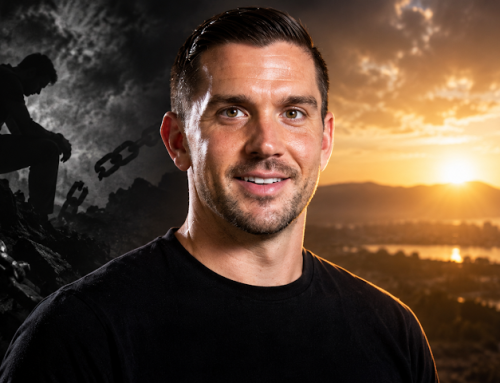

Ryan Dean didn’t start with a roadmap. He started with ideas. A lot of them. Like most early founders, the problem wasn’t motivation, it was direction. “I always grew up having ideas, wanting to start a business, and I didn’t know really what to do,” he said. So he built what he thought would solve that, a place where people could put ideas out into the world and others could help shape them. That became Dreamer Made.
At first, it worked. People showed up. Ideas were shared. There was energy around it. But underneath that, something was off. The platform helped people start, but it didn’t help them move forward. There was no structure, no clear path from idea to execution. Eventually, that gap caught up to it, and around 2020, it shut down.
That’s the part most founders run into but don’t talk about. Not the failure itself, but realizing that what you built isn’t actually solving the problem you thought it was. And by the time you see it clearly, you’ve already invested time, energy, and belief into something that isn’t working.
When Dreamer Made came back, it wasn’t positioned the same way. It wasn’t about ideas anymore. It was about clarity. “What if we could build out a roadmap for entrepreneurs so you have a clear visual of where your business is and where it’s going?” That shift sounds simple, but it cuts at the real issue most founders face. It’s not that they don’t have tools. It’s that they don’t actually know what they should be building next.
The timing of that shift lined up with the rise of AI, which on the surface looks like the answer to that exact problem. Tools that can generate ideas, structure plans, and accelerate execution. But what Ryan saw was something different. People weren’t getting better direction. They were getting faster at going the wrong way. “There are the rare exceptions,” he said, but most of what’s being built off AI alone isn’t going to last. Because speed doesn’t fix bad decisions. It just gets you there quicker.
That shows up in small ways. AI can tell you that you need a trademark. It can walk you through the process. But it can’t tell you if that’s the right move right now, or something you’re wasting time on too early. That’s the difference between information and judgment, and it’s where most early-stage founders get stuck without realizing it.
The bigger problem isn’t even the tools. It’s the feedback loop. Early on, everything sounds like a good idea. Friends say they like it. People in your network are supportive. Conversations feel productive. But none of that means anything if no one actually uses what you’re building. “You can talk to a thousand people, and they’re saying, ‘oh yeah, I love your product,’” Ryan said. “But if they’re not signing up for it… there’s really no point.”
That’s where most founders lose time. They listen to the wrong signals. They take encouragement as validation and keep building in the same direction, even when nothing is actually working. Ryan started to shift away from that. Instead of chasing people who liked the idea, he started paying attention to the ones who didn’t. The people who said it sounded like a “ChatGPT wrapper” or something they’d never use. Those were the conversations that mattered, because they forced him to see what wasn’t working.
That’s the part most people avoid. It’s easier to keep going with something that feels right than to step back and admit it isn’t. But without that correction, you don’t just move slower, you move in the wrong direction entirely.
The second version of Dreamer Made reflects that. It’s not just about giving people tools to build. It’s about helping them understand what they’re actually building and whether it makes sense before they go too far. AI plays a role in that, but it’s not the answer. At some point, every founder runs into decisions that don’t have a clean, automated solution. Moments where context matters, where timing matters, where experience matters. That’s why the model includes human expertise alongside the tools, not to replace anything, but to correct it.
It’s easy to start something now. There’s no shortage of ideas, platforms, or ways to get moving. What’s harder is knowing if you’re building something that actually works. Most founders don’t fail because they couldn’t start. They fail because they never adjusted. They kept building based on assumptions that were never true, reinforced by feedback that sounded good but didn’t mean anything.
By the time they realize it, they’ve already gone too far in the wrong direction.
That’s the real problem.
And it shows up a lot earlier than people think.