
Hampton Roads helped put Americans on the Moon. Now, Virginia wants the region to help train the next generation of astronauts, engineers and space innovators.
On November 16, Gov. Abigail Spanberger announced that Virginia had submitted a proposal to NASA to establish the United States Space Academy in Hampton, bringing a potentially transformative federal institution to a region already deeply connected to America’s space program.
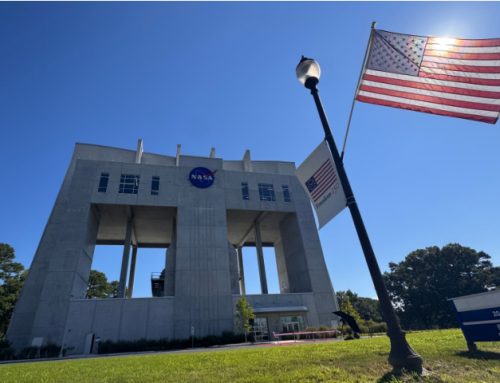
The proposal calls for a campus spanning more than 600 acres across NASA Langley Research Center and Fort Monroe, with additional training facilities at the Mid-Atlantic Regional Spaceport on Wallops Island.
If selected, Hampton could welcome approximately 300 cadets by 2028, creating new opportunities for research, workforce development and collaboration with the region’s growing technology sector.
Building on Hampton’s Space Legacy
Hampton’s connection to space exploration stretches back more than a century.
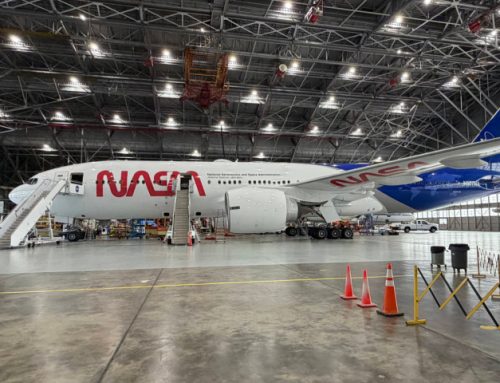
NASA Langley played a foundational role in America’s early space program, including the Apollo missions. More recently, its engineers contributed critical technology to Artemis II, which successfully carried four astronauts around the Moon in April 2026.
Those contributions included rocket testing, spacecraft heat-shield development, splashdown simulations and emergency escape systems.
The proposed academy would build on that existing infrastructure rather than starting from scratch.
Under Virginia’s plan, NASA Langley would serve as the academy’s research and engineering center. Fort Monroe would provide classrooms, housing and administrative facilities, while Wallops would offer hands-on experience with launches, spacecraft operations and mission planning.
A university consortium led by Virginia Tech, including Old Dominion University, Hampton University and Christopher Newport University, would support education in aerospace engineering, cybersecurity, data science and other advanced technologies.
An Opportunity for Hampton Roads Innovation
Beyond training future astronauts, the academy could strengthen Hampton Roads’ expanding entrepreneurial ecosystem.
Companies such as Hampton-based Psionic are already commercializing technologies originating from NASA Langley. In September, Psionic announced an agreement to provide precision landing sensors for four upcoming lunar missions.
Meanwhile, companies operating through the region’s REaKTOR incubator, including StewTech, demonstrate how NASA-developed technologies can find applications in commercial and defense markets.
A permanent academy could create additional connections among researchers, students, entrepreneurs and established aerospace companies.
Those relationships could eventually translate into new businesses, partnerships and employment opportunities, although the proposal does not guarantee specific economic outcomes.
A National Competition
Virginia faces significant competition.
According to NASA Deputy Administrator Matt Anderson, 25 states have submitted proposals to host the academy. Maryland, Pennsylvania and several other states are pursuing the opportunity.
A presidential commission is expected to deliver recommendations by December 26, with the final decision resting with the president.
Virginia’s submission remains preliminary and nonbinding, meaning additional approvals and commitments would be necessary.
For Hampton Roads, the stakes extend beyond securing another federal facility.
The region already contributes to America’s space missions through research, engineering and private-sector innovation. Bringing the U.S. Space Academy to Hampton would create an opportunity to connect that established expertise with the people who will shape the next era of space exploration.
Want to stay connected to the latest news, innovation, startups and business developments across Hampton Roads? Subscribe to This Week in 757, Innovate Hampton Roads’ newsletter, for the latest stories shaping the region’s future, delivered straight to your inbox.