
For more than a century, recycling has been a business of collecting, sorting and finding value in materials other people throw away. The fundamentals have remained remarkably consistent. The technology has not.
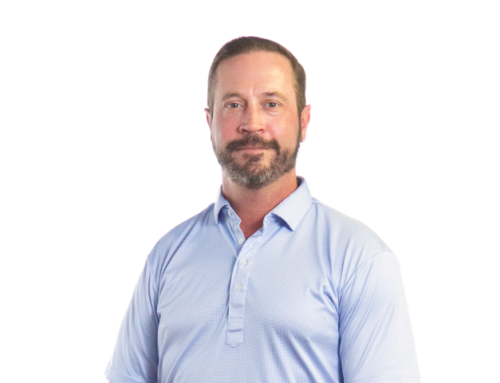
Joe Benedetto grew up in that world. His family has been in recycling for more than 100 years, and he started working in the industry at 13. When he launched Recycling & Disposal Solutions (RDS) in 2004, he brought decades of experience to a business that would eventually grow to five locations and roughly 80 employees.
His story offers a useful lesson for entrepreneurs: innovation is not always about inventing something new. Sometimes it is about recognizing that an established business can operate in a fundamentally better way.
Old Industries Are Full of New Opportunities
Joe defines innovation simply as change. In recycling, that meant looking at processes that had existed for decades and asking how new technology could improve them.
Early single-stream recycling relied heavily on people standing alongside conveyor belts, manually removing different materials. Machinery gradually improved the process, followed by vision systems and automated sorting. Today, AI and machine learning are helping identify materials faster and separate them with greater precision.
The opportunity is not limited to recycling. Every established industry has processes that were designed around the technology available at the time. As that technology changes, so does the potential business model.
The entrepreneurs who recognize those opportunities are not necessarily the ones building the newest technology. They are often the ones who understand an old problem well enough to apply it effectively.
Technology Changes the Jobs, Too
At RDS, robotic sorting technology created a clear operational tradeoff. Joe estimated that one installation could replace approximately six general labor positions, but the company would need one or two higher-skilled employees to maintain the equipment.
The technical positions paid more than double the general labor wages. RDS also trained existing employees who showed interest and aptitude for the new roles.
That is an important distinction in the conversation about automation. Technology can eliminate certain jobs while creating demand for different skills. The transition is not automatic, and it does not mean every displaced worker benefits. But businesses that invest in training can create opportunities for employees to move into more valuable positions.
Joe also points to the growing demand for skilled trades, including mechanics, welders and machine operators. Many of these careers offer strong earning potential without requiring a traditional four-year degree.
Growth Is Not the Same as Building Value
As RDS expanded, Joe’s role changed. In the early days, he drove trucks, operated equipment and handled invoices. At 80 employees, his attention had shifted toward financing, future locations and improving productivity.
That transition became especially important when he began preparing to sell.
Joe had spent years developing a relationship with AMP Robotics and building a Portsmouth facility that could become valuable to its future plans. He also understood that a potential buyer would need more than equipment and revenue. The company needed organized financials, a clear explanation of its profitability and managers capable of keeping operations running without him.
The lesson is straightforward: a business becomes more valuable when its success is not entirely dependent on the person who started it.
Build for the Next Chapter
Joe eventually sold after years of planning, business stress and a health scare accelerated his decision. Retirement brought a different challenge: finding purpose outside the company he had spent so much of his life building.
That final chapter reinforces the larger theme. Businesses evolve, and so do the people who build them.
The goal is not simply to grow forever. It is to create something capable of adapting to new technology, developing its people and continuing to succeed when the founder is ready for what comes next.
Listen to the full conversation with Joe Benedetto on Fervent Four.