
Steve Waddell wasn’t trying to start a company. He was just tired of craning his neck under a bathroom faucet. One night, while watching videos of Rome, he noticed two little girls walk up to a street fountain. One watered her dog. The other plugged the bottom of the spout, and the water popped out the top. “And I thought, genius,” Waddell said. “Why isn’t that in the bathroom?” It wasn’t a business plan. It was an observation. But it stuck.
That moment eventually became Nasoni, though the path between curiosity and company stretched far longer than expected. Waddell began doing what many founders hesitate to do—he kept showing up. Pitch events. Competitions. Local stages. National ones. He raised his hand even when the odds were unclear, often paying his own way just to get in the room. There were early wins that provided encouragement and validation, and there were losses that tested his resolve. Prize money didn’t go toward celebration. It went straight back into the idea—prototypes, design, forward motion.
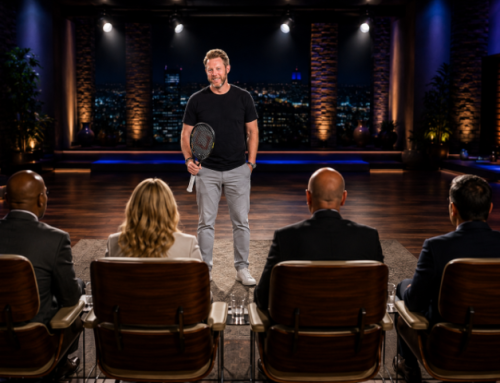
One of those early wins came on a nationally televised competition hosted by a well-known entertainer, where Waddell won $50,000. The production covered all participation-related travel expenses to California, and the prize money went directly into building his MVP of the fountain faucet. That MVP would later become the version he carried with him to other stages, including another nationally televised pitch competition more than a year later.
But momentum came with a cost. Time passed. Money tightened. After a later, particularly expensive setback on another nationally televised pitch competition, Waddell found himselfagain flying home from California, this time exhausted and questioning everything. He remembers asking God, “Why did you put me in this competition only to lose and spend all this money?” It wasn’t self-talk. It was a genuine moment of doubt, the kind that makes quitting feel logical.
Then, quietly, the story shifted. Two weeks later, the television episode he had just lost on aired online. He had paid his own way to compete, walked off without advancing, and assumed the effort was a dead end. Instead, someone saw it. A call came in. Then another. Visibility created opportunity. That exposure unlocked manufacturing, certifications, and forward motion that had previously felt out of reach. What looked like a loss began to reveal itself as a setup.
Just as the company found its footing, reality intervened again. Tariffs hit, wiping out tens of thousands of dollars overnight. Not long after, COVID shut the world down. “You can’t go market a fountain faucet when the world is like that, right?” Trade shows disappeared. Retail conversations stalled. Plans built over years stopped working almost instantly. For many founders, that would have been the end.
Instead, it became a turning point.
The real breakthrough didn’t come from retail or manufacturing. It came from a conversation. A physician looked at the faucet and saw something Waddell hadn’t. “If I had a sensor version of that, we could help spinal cord injury patients live more independently.” The comment reframed everything. “I thought, man, that’s a great idea,” Waddell said. “I’d never even considered that.” What started as a consumer product suddenly carried a deeper purpose.
That shift changed the company’s trajectory. Nasoni transitioned from a hardware startup to a health tech company. The faucet became a tool, not the mission. The focus moved toward independence, accessibility, and dignity. That reframing opened doors to clinical trials, research partnerships, and grant funding that would have been inaccessible under the original model. Progress no longer depended solely on selling a product. It depended on solving a problem that mattered.
Looking back, Waddell is clear about what the journey taught him. “People think it’s just a straight line,” he said. “I learned that it wasn’t.” The path was marked by pauses, pivots, and patience. There were seasons of uncertainty and stretches with no salary, sustained only by belief in the work. What carried the idea forward wasn’t speed or hype—it was persistence. Continuing to show up. Continuing to adapt. Continuing to move, even when the destination changed.
In the end, the idea survived not because it was clever, but because Waddell stayed with it long enough for its real purpose to emerge. The journey didn’t reward the fastest path. It rewarded the willingness to endure a long one.
If you’re building something and looking for smarter ways to think, adapt, and stay creative, This Week in 757 delivers founder stories and insights worth carrying with you.
Subscribe to stay on top of your business journey.